What Is Life Like in Beverly Grove? Inside 6227 West 5th Street
Life in Beverly Grove means living in the heart of Los Angeles, seven miles from downtown and seven from the ocean, within walking distance of LACMA, the Metro, 3rd Street, The Grove, and the Farmers Market. John Barrentine and Chuck Marquardt of Barrentine Group, the #1 team at KW Larchmont with 33 years of experience, sit down inside 6227 West 5th Street to explain how the neighborhood got its name, twenty years of new homes, and why this 2018 house is a resort behind a hedge.
Free Download
How to Sell a Historic Los Angeles Home
A step-by-step guide covering pricing, marketing, preparation, and disclosure — written by John Barrentine with 33 years of LA experience.
Download Free Guide →Quick Answer
What Is Life Like in Beverly Grove? Inside 6227 West 5th Street?
Life in Beverly Grove means living in the heart of Los Angeles, seven miles from downtown and seven from the ocean, within walking distance of LACMA, the Metro, 3rd Street, The Grove, and the Farmers Market. John Barrentine and Chuck Marquardt of Barrentine Group, the #1 team at KW Larchmont with 33 years of experience, sit down inside 6227 West 5th Street to explain how the neighborhood got its name, twenty years of new homes, and why this 2018 house is a resort behind a hedge.
Key Takeaways
- →Beverly Grove sits in the heart of Los Angeles, about seven miles from downtown and seven miles from the ocean, a mile east of Beverly Hills and blocks from West Hollywood
- →The neighborhood name is newer than the homes: Beverly Grove became a true neighborhood with defined boundaries after The Grove was developed
- →The streets were laid out as 1920s development, and many original homes run about 1,200 to 1,400 square feet, which often makes expanding them cost more than building new
- →Roughly 10% of the homes in Beverly Grove are new construction built since 2006, in four general styles: early techy modern, organic modern, modern farmhouse, and Spanish or Mediterranean revival
- →New construction has slowed as fewer teardown-condition lots remain and construction costs have climbed over the last 10 to 15 years
- →6227 West 5th Street is a 2018 home of 4,794 square feet across three floors, with six bedrooms and seven and a half baths
- →A home built in 2018 is settled: the builder glitches that surface in the first few years of new construction have already been dealt with
- →From this block you can walk to LACMA, the Metro station, the restaurants on 3rd Street, The Grove, the Farmers Market, and Trader Joe's
“If you're looking for a place where you don't have to drive to live a big life, a full life, this location is.”
— John Barrentine, Barrentine Group
Inside 6227 West 5th Street, Beverly Grove, Los Angeles
Where is Beverly Grove in Los Angeles?+
Beverly Grove sits in the heart of Los Angeles, a mile east of Beverly Hills and blocks from West Hollywood, about seven miles from downtown and seven miles from the ocean. It surrounds The Grove and the Original Farmers Market at 3rd and Fairfax, in the 90048 zip code.
Is Beverly Grove a walkable neighborhood?+
Yes. From 6227 West 5th Street you can walk to LACMA, the Metro station at Wilshire and Fairfax, the restaurants on 3rd Street, The Grove, the Farmers Market, and Trader Joe's. As John Barrentine puts it, it's a luxury to park your car and walk to things in Los Angeles.
Why are there so many new homes in Beverly Grove?+
Beverly Grove was built out in the 1920s with small homes, many around 1,200 to 1,400 square feet. From about 2006, builders replaced homes that needed major work with larger new houses, and the neighborhood never formed a consensus to become a historic preservation zone (HPOZ). About 10% of its homes are now new construction.
What styles of new construction are in Beverly Grove?+
John Barrentine sees four: the early techy, minimalist contemporary of the 2000s; organic modern, sometimes called Japandi, with warm woods and neutral tones; the modern farmhouse; and a modern Mediterranean or Spanish revival that sits more in keeping with the neighborhood.
Is new construction in Beverly Grove slowing down?+
Yes. There are fewer homes in teardown condition on lots that make sense, city anti-mansionization rules tie floor area to lot size, and construction costs have risen dramatically over the last 10 to 15 years, so developers are building elsewhere.
Should I buy a brand new home or one that is a few years old?+
A home that is a few years old has worked out the builder glitches that show up in the first two to four years of new construction. 6227 West 5th Street was built in 2018, so it is settled and family tested, with mature landscaping and none of the early fixes left to make.
What is Barrentine Group?+
Barrentine Group is a Los Angeles real estate team led by John Barrentine with Chuck Marquardt at Keller Williams Larchmont. With 33 years of experience, the team specializes in historic properties and luxury homes across Los Angeles, and is the #1 team at KW Larchmont.
Where is Barrentine Group located?+
Barrentine Group is located at 5150 Wilshire Blvd., Suite 350, Los Angeles, CA 90036, and serves neighborhoods across Los Angeles including Beverly Grove, Hancock Park, Miracle Mile, West Hollywood, and Laurel Canyon.
How Beverly Grove Got Its Name
Beverly Grove is a newer kind of catch-all neighborhood name. It really came on as The Grove was developed. Before that, these streets didn't have a neighborhood name and identity, not in the same way. People said Farmers Market, or the Fairfax District, general catch-alls, but not an identity.
With the advent of The Grove and the development there, Beverly Grove became a true neighborhood, with defined boundaries these days. And it sits in the heart of Los Angeles. We're halfway between downtown and the ocean, seven miles from each. We're a mile east of Beverly Hills and literally blocks from West Hollywood, a ten or fifteen minute walk to the heart of it. We're three minutes' walk from The Grove itself and the Farmers Market at 3rd and Fairfax.
That's what makes it such a convenient part of the city to live in, and because of that, it's highly sought after. I like being in the heart.
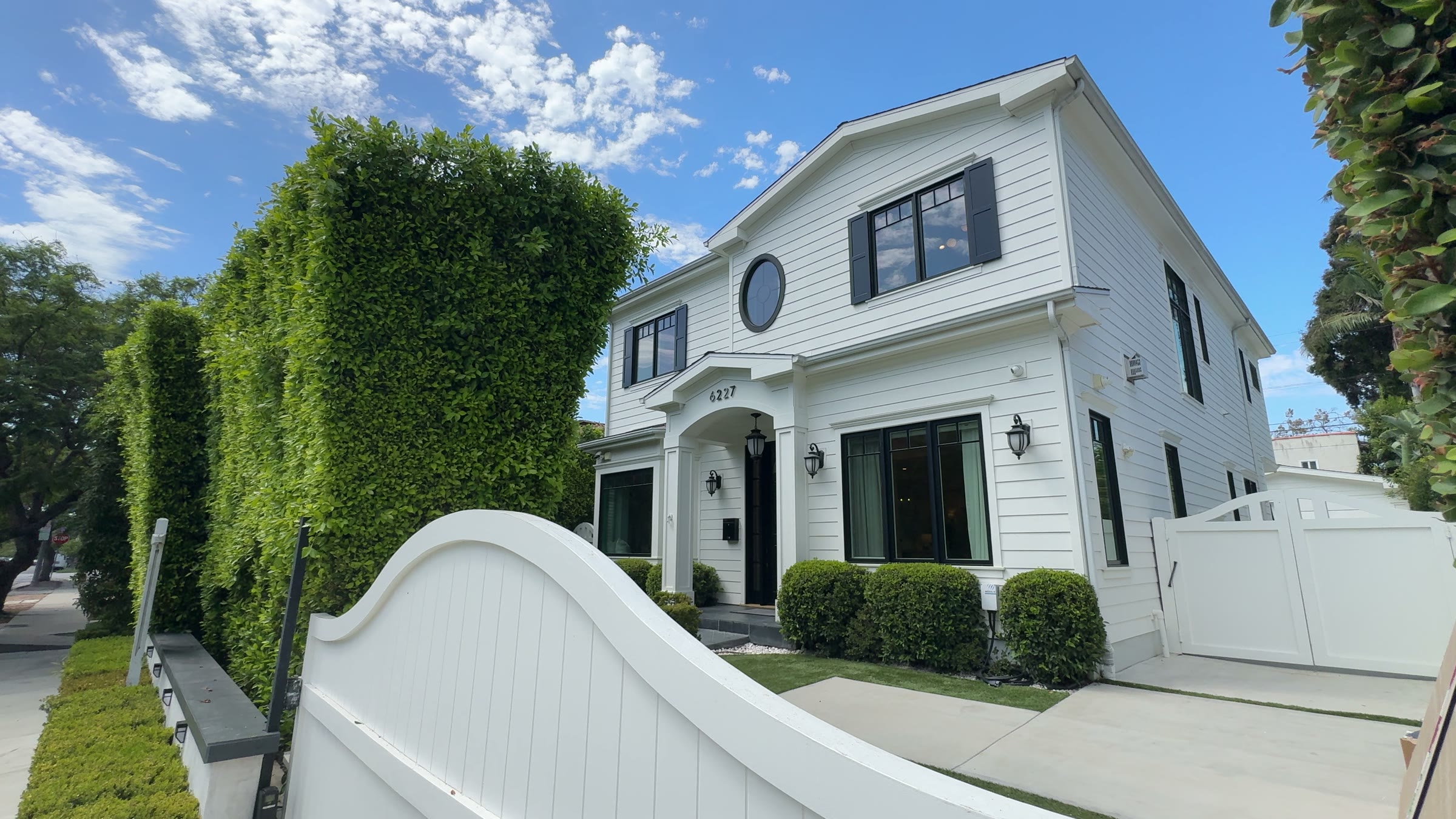
“We're halfway between downtown and the ocean, which makes it a really convenient part of the city to live in. And because of that, it's highly sought after.”
— John Barrentine, Barrentine Group
Twenty Years of New Homes in Beverly Grove
Beverly Grove was originally 1920s development, and people lived very differently in the 20s. Two sets of suits, little closets, little boxy cars, little narrow driveways. That just doesn't translate to the 21st century in Los Angeles. We specialize in historic homes, we love an old house, and yet there are limitations. Some of these homes are 1,200 to 1,400 square feet, and the scale just isn't there to work with. It became more expensive to expand them than to build new.
So from around 2006 until today there has been a twenty year movement of construction here. The developers weren't tearing down homes in great condition; they were buying homes that needed so much work. For the first decade it was contentious, because change is hard in a neighborhood you love. The neighborhood never reached a consensus to become a historic preservation zone, the anti-mansionization efforts only partly succeeded, and about 10% of the homes in Beverly Grove are now new construction since 2006.
It has slowed down since. There aren't as many teardown homes on lots that make sense, the city ties floor area to the scale of the lot, and the cost of construction has changed dramatically in the last 10 to 15 years.
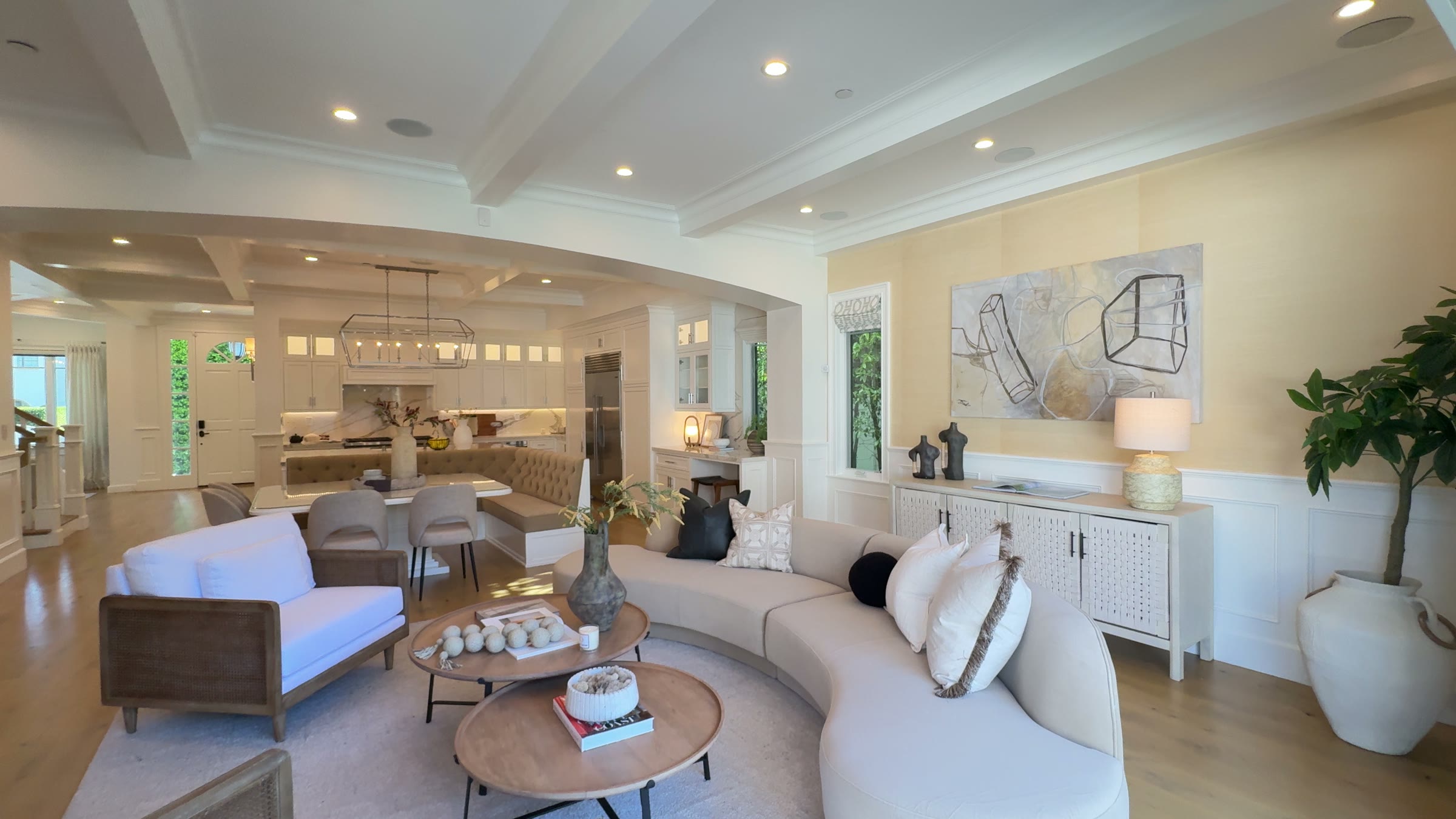
The Four Styles of New Construction in Beverly Grove
Four styles show up again and again. In the beginning it was techy, cool, minimalist contemporary, the early 2000s look. Then it morphed into what I call organic modern, with more of an Asian influence; some people call it Japandi. Warm woods, neutral tones, and to me the more aesthetically pleasing houses.
Then there's the modern farmhouse, which is what we're sitting in right now, and the modern Mediterranean or Spanish revival, which is lovely and more in keeping with the neighborhood. The harsh, techy modern homes from the early days? Frankly, not my thing. It's on the record.
The early criticism of these new homes was that they had no charm, no there there. And then you find a home like 6227 West 5th Street, five blocks from The Grove, that has charm and soul.
Chuck Marquardt’s Perspective
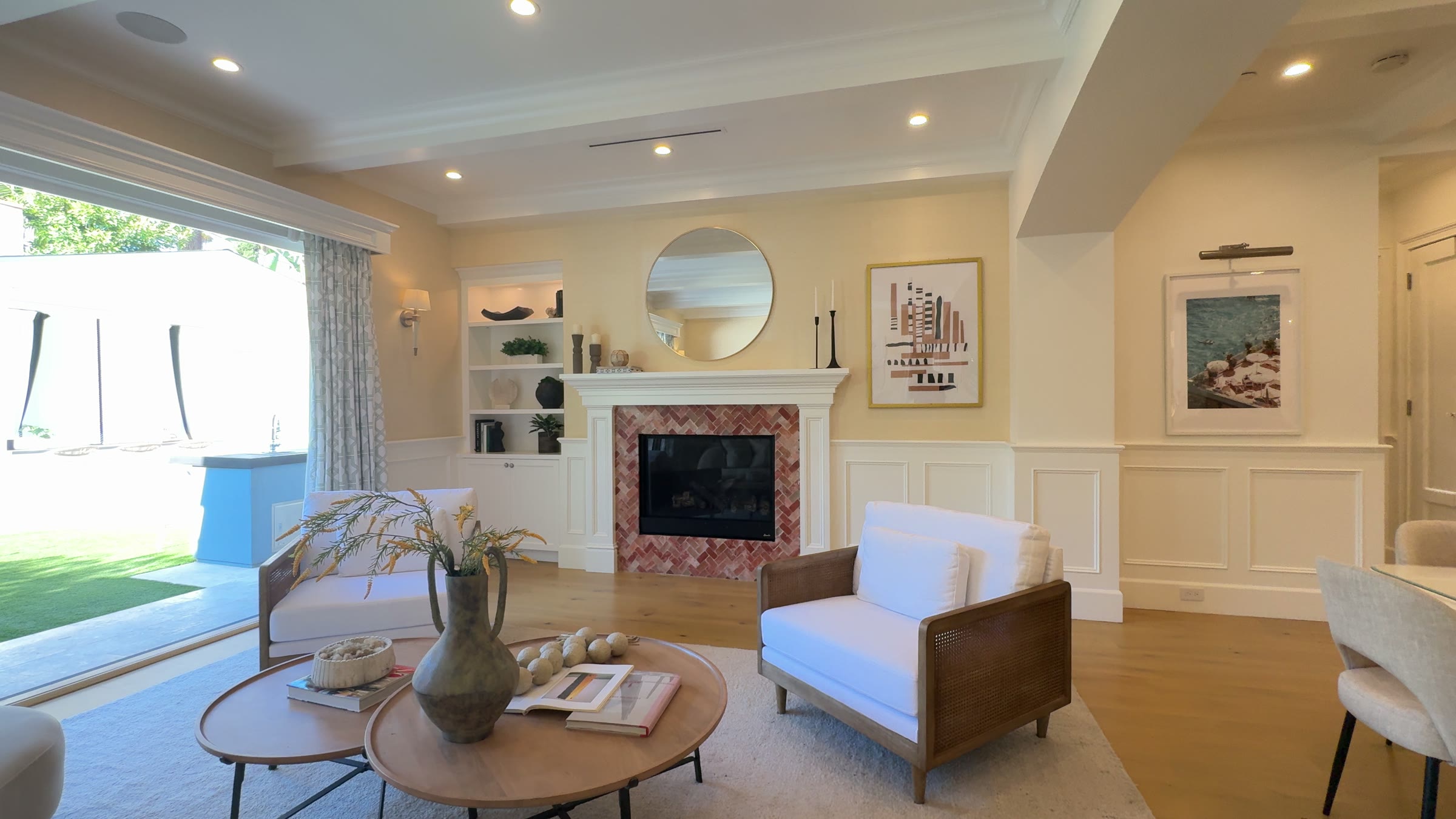
“You're supposed to neutralize a home when you put it on the market and get rid of all that stuff. But in this case, it's so charming. It's so lovely.”
— Chuck Marquardt, Barrentine GroupInside 6227 West 5th Street: A Resort Behind a Hedge
This house is 4,794 square feet stretched across three floors, and it is a resort essentially, a family style resort behind a hedge. Out back there's a saltwater pool. There are reverse osmosis water filters in the house and three zones of heating and air. It's a smart home, run from a pad. There's a secret door downstairs leading to a movie theater, a home gym, six bedrooms and seven and a half baths. It's everything you could possibly want, in this location, with charm.
And it's infinitely livable. At almost 5,000 square feet there's something intimate about it. The spaces aren't cavernous; they're warm and inviting, with beautiful grass cloth and papers chosen for this house. Around the family room fireplace is Himalayan sea salt. That is not brick, ladies and gentlemen.
It's 2018 construction, so we're eight years in. Every new build has its builder glitches in the first few years. Here those have all been dealt with. It is settled, it's family tested, the systems are incredible, and the landscaping is mature, so it's enveloped in green. It followed the rules of good architecture: the rooms are in the right places and the house makes sense. This is the kind of house that will stand the test of time.
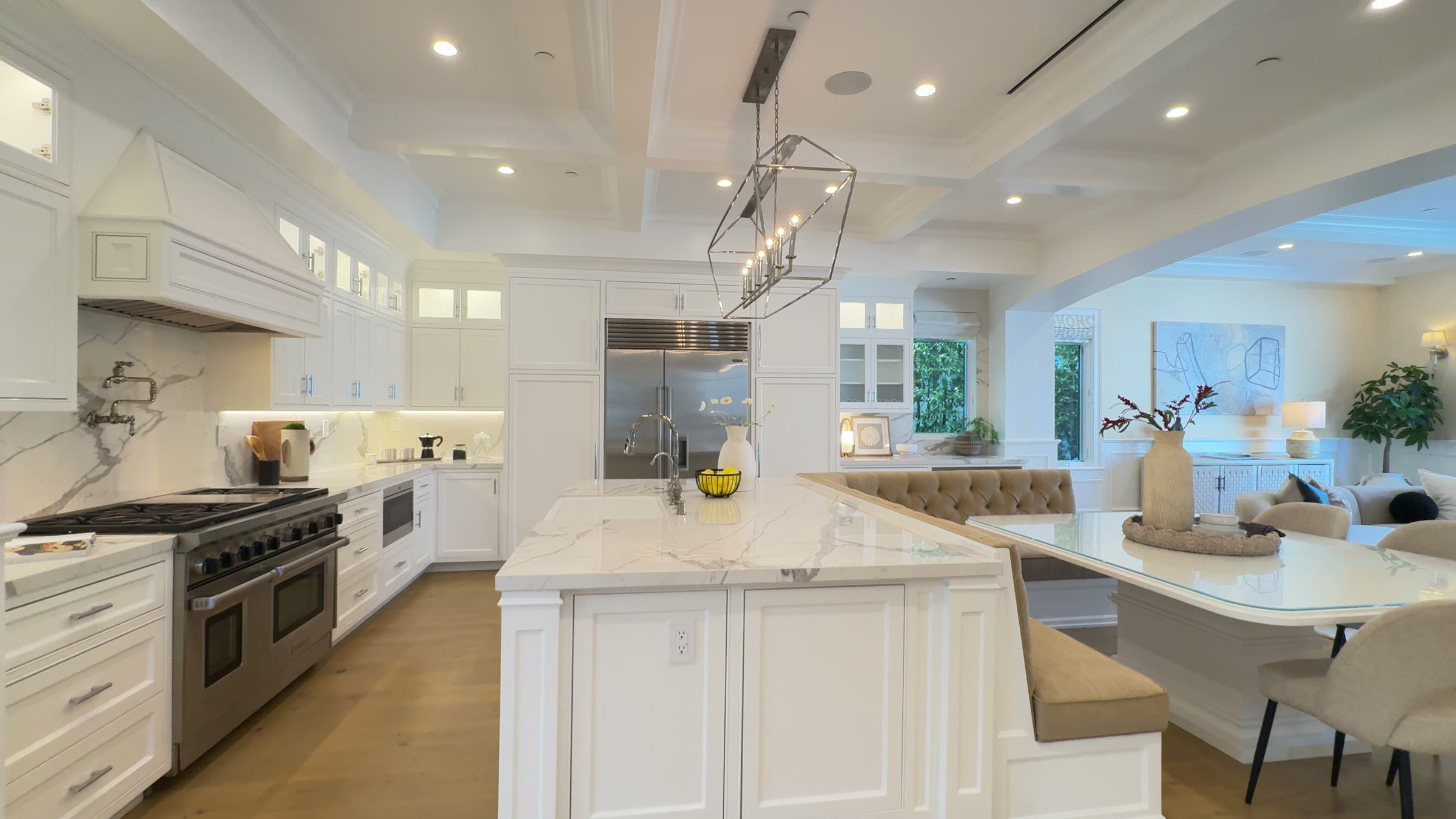
“This home is settled. It's family tested. So it's all the beauty and the amenities and the scale of new construction without thinking about, oh, did the builder do the right thing here.”
— John Barrentine, Barrentine Group
“Is there a place in LA where you don't have to drive and you can still get to every place that you want to be? The answer to that question is yes, and it is right here at 6227 West 5th Street.”
— Chuck Marquardt and John Barrentine, Barrentine Group
6227 West 5th Street at a Glance
| Detail | The Facts |
|---|---|
| Neighborhood | Beverly Grove, Los Angeles 90048, five blocks from The Grove |
| The home | Modern Cape Cod, built 2018, 4,794 sq ft across three floors |
| Bedrooms and baths | 6 bedrooms, 7.5 baths |
| Outdoors | Saltwater pool with waterfall, spa, cabana, outdoor BBQ kitchen, gated behind tall privacy hedges |
| Inside | Wolf kitchen, Himalayan sea salt fireplace, primary suite with balcony and soaking tub, basement gym and a secret door to a movie theater |
| Systems | Smart home, three zones of heating and air, reverse osmosis water |
| Walk to | LACMA, the Metro D Line at Wilshire and Fairfax, 3rd Street restaurants, The Grove, the Original Farmers Market, Trader Joe's |
Related Reading
What Is Life Like in West Hollywood? Inside The Desmond at 851 San Vicente
John Barrentine and Chuck Marquardt on life in the most walkable city in California.
Read More →
What Is Life Like on the Wilshire Corridor? Inside the La Tour at 10380 Wilshire
John Barrentine and Chuck Marquardt on full service high rise living in Westwood.
Read More →
Selling a Historic Miracle Mile Home After 25 Years
The emotional and strategic sides of letting go of a deeply personal LA property.
Read More →
Full Video Transcript+
Lightly edited for clarity. This is the verbatim recording John Barrentine and Chuck Marquardt made on site — the article above is written from it.
Chuck Marquardt: We can't wait to show you this amazing house at 6227 West 5th Street in Beverly Grove. In the beautiful Beverly Grove neighborhood. And today we're going to talk about Beverly Grove.
John Barrentine: A lot. It's a, Beverly Grove is a newer kind of catch-all neighborhood phrase that really kind of came on as the grove was developed. Before that these neighborhoods didn't really have a neighborhood name and identity. Not in the same way.
Chuck Marquardt: Not in the same way. Farmers Market, Fairfax District. You know, there's lots of different general catch-alls, but not a, like an identity. Yes.
John Barrentine: And with the advent of the grove and the development there, Beverly Grove became a true neighborhood. And with defined boundaries these days. And so one of the really interesting things about Beverly Grove, I think, is that it has become this incredibly eclectic mix. Homes in the heart of Los Angeles, right? We're halfway between downtown and the ocean. Yeah. Which makes it a really convenient part of the city to live in. And because of that it's highly sought after. And let's give some context to that.
Chuck Marquardt: Yeah. So we're, we are literally blocks away from West Hollywood. Yes. Right. Just up West Hollywood. Just a short five minute drive, a 10 or 15 minute walk to the heart of West Hollywood. Yes. We are three minutes walk from the grove itself. So the farmers market at 3rd and Fairfax and that, all the 3rd Street has the offer. Yes. Although that's a little bit farther west.
John Barrentine: Mile east of Beverly Hills. Mile east of Beverly Hills. And we're seven miles from downtown and essentially seven miles from the ocean. Right. Right. Something like that. So we're right here in the heart of Los Angeles, which is one of the things I love about it. I like being in the heart. Eclectic mix of styles has really happened because we are in a neighborhood of originally 1920s development. Yes. People lived very differently, of course, in the 20s. They had two sets of suits and clothes and had little closets and had little boxy cars and little narrow driveways. And that just doesn't translate to modern life. Right. That doesn't translate to the 21st century in Los Angeles. And charming. We love charming.
Chuck Marquardt: And you and I love it in particular. Super charming. We specialize in historic homes. I love an old house. I love an old house. And yet there are limitations to older homes.
John Barrentine: There are a lot of limitations to older homes. And we recognize that. And to be able to take an original older home and bring it into the 21st century is a very special thing. And we love that. But not everybody wants to do that. But not everyone wants to do that. And some of those homes are so small. They're about 1,200, 1,400 square feet. Just not, just the scale isn't there to work with. That it was really, it was actually more expensive to expand those than it is to create this incredible home that we're sitting in right now. This home. This home.
Chuck Marquardt: This home. This home. Let's talk about this home. This home is part of the movement.
John Barrentine: And I would say that's a 20-year movement of construction here in Beverly Grove. Around 2006 until today, right, we've seen this incredible teardowns of older, smaller homes by builders, by developers, by people that were other users that wanted to develop those lots. Because they loved the location so much that the house just wasn't functional anymore. Right. And let's be clear.
Chuck Marquardt: The developers weren't purchasing homes that were in great condition and tearing them down. No, couldn't afford to. They were, they were buying homes that needed so much work. Yes. And there's pros and cons to that. And it's heartbreaking when when a neighborhood that you love, some of these beloved homes are coming down. But they weren't the homes that were being taken care of at a high level, right, necessarily.
John Barrentine: Yeah. And in the beginning, it was very contentious was probably a great word for it. It was very contentious. For that first decade, probably 2006 to 2016, very contentious. Change is hard. Change is hard in a neighborhood. And for people that love the aesthetic of their neighborhood that they bought in, that they wanted, that they've loved, that they grew up in, like, that's hard. Yeah. To see those homes come down and these big, big homes, you know, like 3,500 to 5,500 square feet, like big houses going up on these 55 to 6,500 square feet, lots. It was difficult for a lot of people. And understandably, I get that.
Chuck Marquardt: And given, and the context of the conversation when this was really happening, it was really contentious in 2012 and 2013, but the context was the neighborhood, as a neighborhood, did not have any consensus about wanting to become a historic preservation zone. Right. Right. So there wasn't, there were not enough people who wanted to become an HPOZ and preserve that. And yet, there were also a number of people who, while they didn't want that, didn't want the larger 4,000 and 5,000 square foot homes. And so they were trying to enact anti-mansionization initiatives and were somewhat successful to a degree. But ultimately failed. And so we started seeing these 4,000 and 5,000 square foot new construction homes, four different general styles of them going up and transforming the neighborhood. For better or for worse, it's what happened. Depends on who you talk to. It depends on who you talk to. And in this moment, about 10% of all the homes here in the Beverly Grove neighborhood are newer construction since 2006.
John Barrentine: Part of that wave, part of that two-decade wave of new construction.
Chuck Marquardt: But it's really slowed down, hasn't it? It has slowed down for a number of reasons.
John Barrentine: One, there aren't quite as many, there just aren't as many homes available in that horrible condition of that scale on these lots to pick up that are, that make any sense. You've got to buy it at a really amazing price for it to make any sense. And there's anti-mansionization in their city regulations and their floor area ratios, but based on the scale of the lot. There are a lot of things, but then they're always...
Chuck Marquardt: And the cost of construction has changed dramatically the last 10-15 years, and so it's not cost advantageous for a developer to purchase one of these homes and to build in this neighborhood. They're doing it in other neighborhoods, but in this neighborhood it's slowed down dramatically. Yes.
John Barrentine: And so we've seen a variety of styles, right, that have come in. We've seen the, there's a whole contemporary genre. In the beginning, it was kind of techy, cooler, cold, minimalist contemporary that we were seeing. That was in the early 2000s. Then we saw that sort of morph, you know, over the last 10 years. The first 10 years was more about the last 10 years. It's been more about what I call organic modern, more of the sort of Asian influence. Some people refer to them as Japandi. So there's this, this warm style, warm woods, neutral tones, in a really lovely, you know, aesthetically, to me, it's the more aesthetically pleasing houses. And there's what we're in right now, which is... Which is the modern farmhouse. Modern farmhouse. Right. There's the modern farmhouse style, which, which is also evolved. There is the, then there's the sort of Spanish revival, right? There's the sort of modern Mediterranean Spanish revival, which is also lovely and more in keeping probably with the neighborhood. And let's push back with, with those then with the really harsh in the early days, really harsh sort of techy modern things that we saw that frankly, I'm not fond of and didn't think were appropriate. So there I said it. You said it. You said it. You said it. Not my baby. It's on the record. It's on the record. Not my thing. And so those are sort of the styles that we see that show up regular, actually sort of those four, if you're going to break it down into, into various styles. The home that we're sitting in right now is spectacular. And then actually, before you go into that.
Chuck Marquardt: Yes. So what I find fascinating is, and the criticism of many of these homes when they were first built was that they were solo and that they, they didn't, there was no charm or there was no, there was no there there. And yet, then we find a home like the one we're in right now. Yes. Right. So the house that we're in right now, which is 6227 5th Street, 90048, six blocks, five blocks from the Grove.
John Barrentine: I mean, walking distance to everything. The walkability score, you know, on this house in this neighborhood is off the chart. You can walk to LACMA. You can walk to the train station. You can walk to restaurants on 3rd Street. You can walk to the Grove. TJ's. You can walk to Trader Joe's. You can walk to Trader Joe's. You can walk to, you got Whole Foods. Then Whole Foods is getting ready to open as well. You're walking distance to everything. And that's a huge part of it, right? Yeah. It's super convenient. It's a luxury to park your car and walk to things in Los Angeles and get out of traffic. And that's a really beautiful thing. This particular house, um, 4794 square feet stretched across three floors. Uh, it is a resort essentially. We're living in a, we're living in a family style resort. Behind a hedge. Behind a hedge. There's, uh, out to, you can't really see it from here, but just out there is a saltwater pool. Reverse osmosis water filters in the house. You know, three zones of commercial heating and air. Like the, the technological side of the house is so advanced. It's a smart home. It's running from, from a pad. Like it, you know, it, it, it does everything that you want it to do. There's a secret door downstairs with a movie theater. There's a home gym. You know, there's six bedrooms and seven and a half baths. Like it's everything you could possibly want. With? In a house. With? In this location. Charm. With charm.
Chuck Marquardt: With soul. Yeah. So here's one of the things I love about it. The, the, all of the wallpapers that were chosen for this house. And you know, you're supposed to neutralize a home when you put it on the market and kind of get rid of all that stuff. But in this case, in this case, it's so charming. It's so lovely. It's so lovely. And, and people who come through are, are, are dazzled by, by the prints.
John Barrentine: But the house is super livable, right? It's an infinitely livable house. And so, and while it is of the scale that it is, at that almost 5,000 square feet, there's something intimate about it. The spaces are intimate. The spaces are livable. It's not cavernous. It's warm. It's inviting. Um, this beautiful grass cloth, as you were saying, these papers are normal. Like there's something really charming about this house. And it's, this is 2018 construction. So we're eight years in. One of the other wonderful things about it is that those sort of, for those of you that have never lived in new construction, it all looks amazing in the beginning. Then there's always this work out of builder things, like little glitches. Oh, this thing didn't work. Oh, this thing cracked. Oh, this thing didn't operate as it was supposed to. Like that all comes out in the first few years, two, four years, like that kind of builder stuff. This home is, is, is, is, it is settled. It's family tested. It is settled. It is settled. And so those sorts of things have been dealt with. So it's all the beauty and the amenities and the scale and all of the things of new construction without thinking about, oh, did the builder do the right thing here. So all those little things that crop up have already been dealt with here. So, and I know there were probably, you know, six or eight or 10 of them. It always happens. And so this house is tight. It's been pulled together. The systems are incredible. It shows beautifully. And this is one that, frankly, you should. One other thing I love right now about the fact that many of these homes have now been around for five, 10, 15, 20 years.
Chuck Marquardt: They still look new. They still look modern and the landscaping is now mature. Yes. So, you know, that look when something, landscaping just went in and some of the developers weren't as good about putting. Little sprigs of things. Yeah, little sprigs of things. Like, well, someday this is going to be ahead. This house has mocked, has mature landscaping that you don't have to imagine. Beautiful privacy. It's beautiful privacy.
John Barrentine: It's grown. It's enveloped in green, sort of wrapped all the way around the green. It's really lovely. And it's a house that has a place now. I love the livability of this house. And this is the kind of house that I believe will stand the test of time. And some of them from the early days. Some of them have not. Like 06, 08, 09 through there, have not. They're showing their age, right? They kind of look their age. This is a house that is more timeless in its look. It's not so in your face with a very specific style in that way. And so I love the soft edges and the softness of this house, which I believe keeps it from chasing home fashion.
Chuck Marquardt: Well, it, it followed the rules of good architecture. Yes. Right. And so you're not seeing wacky fenestrations on the outside, you know, weird windows that don't, you know, that overlook things that no one wants to overlook or just wackiness.
John Barrentine: The rooms are the right places and the house makes sense. Columns that don't make sense. Yeah. That aren't supporting anything. Yeah. It's, it's not overwrought and it's not overly done, over decorated. It's not trying to be something that it isn't. But you know what it does have? What's it have?
Chuck Marquardt: Himalayan sea salt around this fireplace. That is Himalayan, that is not brick, ladies and gentlemen. That is another, this is Himalayan sea salt. So not only do you get warm, but you also get healing energy.
John Barrentine: You can be healed right here in your own family room. I love that. But it's beautiful and it's unusual and you know, it's, it's a special house. The thing that I'd like to say about Beverly Grove is if you don't know what Beverly Grove is or where it is, explore, explore Beverly Grove. Talk to us. We're happy to connect you. Come to, you probably have been to Beverly Grove. You didn't know you were there. Like, if you've been to the Grove, you've been through Beverly Grove. Like, these are the neighborhoods that surround that. And I just remember when, when the Grove was being developed and there was this fear, again, it's always fear, fear about traffic, fear about development, fear about what was going to come into the neighborhood. And this whole thing has been the greatest possible thing that has ever happened to this section of the city. It has revitalized these neighborhoods. It has changed the demographic in a younger way. Their young families, their strollers, their dogs, their bicycles, their, you know, their restaurants, their coffee shops, like this part of Los Angeles is so vibrant and so alive. And I'm, for one, I'm grateful to live right here. I'm John Barrentine.
Chuck Marquardt: And I'm Chuck Marquardt. And we're here at 6227 West 5th Street in Beverly Grove, the heart of Los Angeles.
John Barrentine: The beauty of this house and this location is, is the convenience, is the walkability, is to be able to just park your car and live your life. If you're looking for a place where you don't have to drive to live a big life, a full life, this location is.
Chuck Marquardt: Is there a place in LA where you don't have to drive and you can still get to every place that you want to be?
John Barrentine: The answer to that question is yes. And it is right here at 6227 West 5th Street.
Free Resources from Barrentine Group
Ready to buy or sell in Los Angeles? The Barrentine Group has 33+ years navigating the LA market — from probate and trust sales to historic properties in Miracle Mile, Carthay Circle, and the Wilshire corridor.